Introduction
One will discover how to preserve the playing surface of a billiard table through systematic cleaning, regular brushing and careful repair. The guide explains why proper maintenance reduces wear, prevents uneven ball roll and saves the expense of premature replacement. Readers will gain confidence to perform each task without professional assistance while understanding the impact of each action on felt longevity. Ultimately, a well‑maintained cloth enhances the overall enjoyment of the game.
What You'll Need
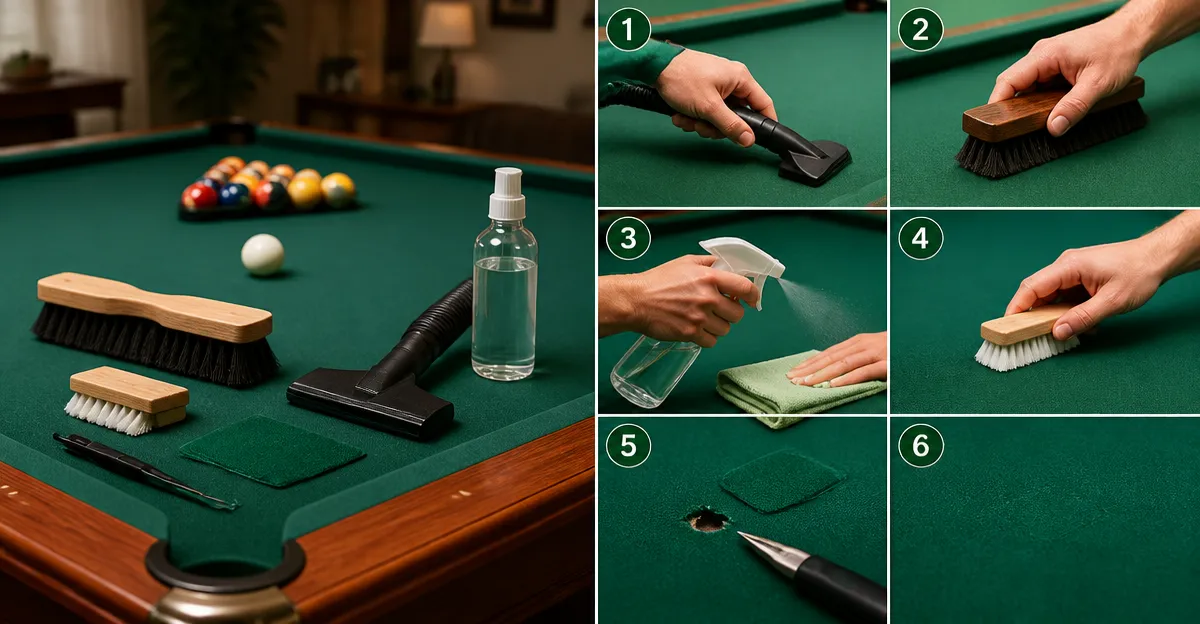
- A soft microfiber cloth or lint‑free rag for applying cleaning solution.
- A low‑suction shop‑vac or handheld vacuum with a brush attachment.
- A horsehair or nylon pool‑brush designed for felt.
- Gentle cleaning solution (mix one part white vinegar with three parts distilled water).
- Protective gloves.
- Replacement felt if damage is beyond repair (see product recommendations below).
Step 1: Prepare the Table and Area
The first step is to clear the playing surface of all balls, cues and accessories. One should then remove any loose debris by sweeping gently with a soft brush. This preparation prevents dirt from being pushed deeper into the fibers during cleaning. Finally, ensure the room is well‑ventilated to allow any moisture to evaporate quickly.
Step 2: Vacuum the Felt
Using a shop‑vac with a brush attachment, one should move the nozzle across the cloth in overlapping strokes. The vacuum extracts dust, chalk particles and minute fibers that cause friction. It is important to keep the suction low to avoid pulling the cloth away from the slate. Regular vacuuming, at least once a month, maintains a smooth surface and extends the cloth's life.
Step 3: Apply Gentle Cleaning Solution
One should dampen a microfiber cloth with the vinegar‑water mixture, ensuring it is only slightly moist. Lightly wipe the felt in a circular motion, focusing on areas with visible stains or chalk buildup. The mild acidity of vinegar lifts grime without damaging the wool‑polyamide blend commonly found in premium felts. After cleaning, allow the cloth to air dry completely before proceeding.
Step 4: Brush the Felt for Uniform Texture
With a horsehair or nylon pool‑brush, one should brush the felt following the direction of the nap, typically from the head rail toward the foot rail. Brushing redistributes fibers, eliminates minor matting and restores consistent ball roll. One must use gentle pressure to avoid pulling fibers out of the weave. This step should be performed after each cleaning session for optimal results.
Step 5: Inspect for Wear and Damage
One should examine the entire surface under bright lighting, looking for thinning, holes, or discoloration. Common signs of wear include frayed edges, uneven spots and persistent chalk marks that do not brush away. If damage is limited to small areas, a repair kit with patch material can be used; however, extensive wear often warrants full replacement. The decision to replace should consider the table's usage frequency and the player's performance expectations.
Step 6: Replace or Upgrade the Felt (When Necessary)
When replacement is required, selecting a high‑quality pre‑cut cloth simplifies installation and ensures precise dimensions. The Accuplay Pre‑Cut Pool Table Felt offers a 20 oz medium‑fast speed fabric composed of 75% wool and 25% polyamide, providing durability and a balanced ball speed. Priced at $122.45 with a 4.6‑star rating from 1,352 reviews, it is praised for easy installation and accurate color matching. For a more budget‑friendly option, the Mixweer Pool Table Felt includes a full cloth and six strips, weighing approximately 1.3 kg and priced at $38.99 with a 4.2‑star rating. Although slower, it serves well for practice tables and offers a cost‑effective entry point. Players seeking a high‑performance, fast‑speed surface may prefer the Championship Teflon Pool Table Felt, which incorporates DuPont Teflon for water and stain resistance, weighs ±10.9 oz/yd², and carries a 4.5‑star rating at $149.00. For those who favor a worsted blend that delivers rapid ball travel, the Boshen Worsted Blend Pool Table Felt provides a 60% wool/40% nylon composition, a pre‑cut size of 100" × 54", and a 4.3‑star rating for $104.49. Finally, the Championship Saturn II Pool Table Cloth delivers a tournament‑tested Teflon‑treated surface, includes rail pieces and spots, and is rated 4.6 stars at $127.07. Selecting the appropriate felt depends on desired speed, budget and aesthetic preference.
Step 7: Install the New Felt
Installation begins by laying the pre‑cut cloth face up on a clean surface, ensuring the marked side faces upward. One should align the cloth with the slate, allowing a few extra inches on each side for stretching. The rail pieces are then attached, following the manufacturer's markings for top and bottom orientation. After securing the cloth with staples or double‑sided tape, one must stretch it evenly to eliminate wrinkles, then trim any excess using a sharp utility knife.
Tips & Pro Tips
- Never use harsh chemicals such as ammonia or bleach; they degrade wool fibers and diminish the felt's lifespan.
- Schedule a full cleaning routine after every 50‑hour playing interval to prevent chalk buildup.
- When brushing, avoid circular motions that can create swirl patterns; always brush in the direction of the nap.
- Apply a light dusting of talc or chalk powder after cleaning to restore the felt's grip, but remove excess with a vacuum.
- Consider using a humidifier in dry climates; extremely low humidity can cause the wool to become brittle.
Troubleshooting Common Issues
Issue: Persistent chalk stains that reappear after brushing.
Solution: Perform a second cleaning with a slightly stronger vinegar solution (1:2 ratio) and ensure the cloth dries completely before the next use.
Issue: Uneven ball speed across the table.
Solution: Verify that the cloth is fully stretched and that no low spots exist in the slate; re‑stretch or replace the felt if necessary.
Issue: Small holes or tears appearing after heavy use.
Solution: Apply a fabric patch using a matching wool blend; for larger damage, replace the entire cloth following the steps above.
Conclusion
One now possesses a complete, step‑by‑step methodology for maintaining billiard cloth at home, encompassing cleaning, brushing and repair techniques. By following the recommended routine and selecting a suitable replacement felt, the playing surface will retain its performance characteristics for years. Consistent care not only protects the investment but also enhances the overall quality of each game. Readers are encouraged to apply these practices regularly and enjoy a consistently smooth and reliable billiard experience.
Products Mentioned in This Guide
Frequently Asked Questions
How often should I vacuum and brush my billiard table cloth?
Vacuum the cloth weekly and brush it gently after each vacuum to lift fibers and prevent uneven wear.
What cleaning solution is safe for billiard cloth?
A mixture of one part white vinegar to three parts distilled water applied with a microfiber cloth is safe and effective.
Can I use a regular household vacuum on my pool table?
Use a low‑suction shop‑vac or handheld vacuum with a brush attachment to avoid pulling fibers out of the felt.
When is it necessary to replace the felt instead of repairing it?
Replace the felt if tears, deep burns, or extensive fraying cannot be stitched or patched without affecting ball roll.
Do I need protective gloves when cleaning the cloth?
Yes, gloves protect your hands from the cleaning solution and keep the cloth free of oils and fingerprints.