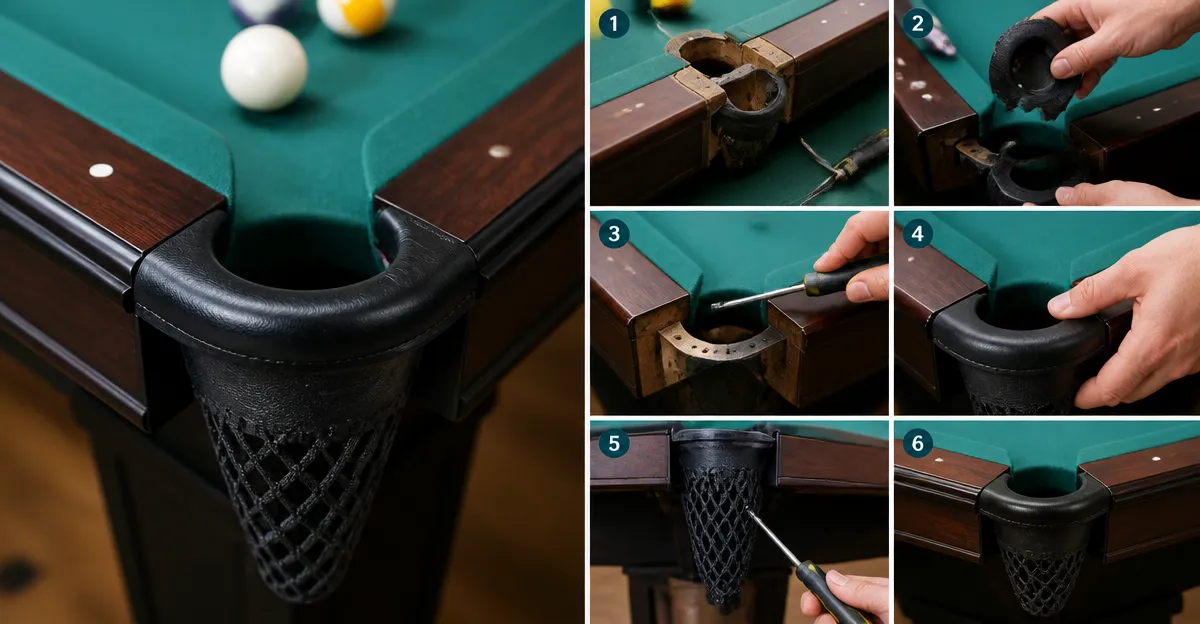
Introduction
This guide explains how one can repair or replace pool table pockets using readily available components. It demonstrates why maintaining pockets is essential for consistent ball drop and overall table longevity. The reader will learn how to assess damage, select appropriate replacement parts, and install them safely. By following the steps, one can avoid costly professional service and achieve a professional‑grade finish.
What You'll Need
- Replacement pockets (leather, plastic, or liner)
- Phillips screwdriver and appropriate screws (often included with pockets)
- Adjustable wrench or spanner
- Anti‑rust oil for metal mounts
- Soft cloth for cleaning
- Measuring tape
Below are recommended products that satisfy these requirements. Each product is linked on its first appearance.
Step 1: Inspect Existing Pockets
Begin by examining each corner and side pocket for signs of wear, tearing, or rusted mounts. Common indicators include frayed leather, cracked plastic, or water damage that causes swelling. If the pocket liner is scratched, balls may not drop cleanly, leading to gameplay interruptions. Document the condition with photos if desired.
When the inspection reveals that the pockets are beyond repair, one should select a replacement that matches the table's size and aesthetic. For a high‑quality leather look, the GSE PU Leather Pool Table Pockets provide heavy‑duty PU leather with a diamond pattern and are priced at $69.98 with a 4.6‑star rating from 553 reviews.
Step 2: Remove Old Pockets
Using a Phillips screwdriver, loosen the #6 iron mounts that secure each pocket. The mounts are typically covered by a rubber gasket; remove it gently to avoid damaging the table surface. If the screws are rusted, apply a few drops of anti‑rust oil and let them sit for five minutes before turning.
For budget‑conscious repairs, the MoyanSuper Plastic Pool Table Pockets are an economical alternative at $20.99 and carry a 4.4‑star rating from 324 reviewers. Their sturdy plastic web design includes pre‑drilled holes, making removal and installation straightforward.
Step 3: Clean and Prepare the Table Surface
After the old pockets are removed, wipe the mounting area with a soft cloth dampened with a mild cleaner. Ensure that no debris, old gasket material, or rust remains. This preparation step is crucial because any residue can interfere with the new pocket’s seal and cause uneven ball drop.
If the table has a damaged pocket liner, consider installing a protective liner before the new pocket. The Homoyoyo Pool Table Pocket Liners are lightweight, black denim‑style liners measuring 1.96 inches on each side, priced at $16.46 with a 4.3‑star rating from 64 reviews. They protect the wood and provide a smooth surface for the pocket to sit on.
Step 4: Install New Pockets
Position the new pocket over the pre‑drilled holes. Align the iron mounts with the screw holes, then insert the supplied screws, bolts, and gaskets. Tighten the screws until the pocket sits firmly without wobbling; overtightening may strip the wood.
The MoyanSuper PU Leather Pool Table Pockets offer a premium PU leather construction with an elegant diamond pattern. Priced at $72.69 and rated 4.4 stars from 54 reviews, they include a spanner, screws, bolts, and gaskets, simplifying the installation process.
Alternatively, the Ozone Billiards Leather Web Pockets provide a classic web style in black leather for $57.99 and a 4‑star rating from 38 reviewers. Their universal design fits most tables and offers a traditional aesthetic.
During installation, verify that the pocket opening aligns with the table’s rails. Use a measuring tape to ensure the pocket’s outer dimensions match the original specifications noted in the product image.
Step 5: Test and Adjust
Once all six pockets are installed, perform a quick roll test. Gently roll a cue ball into each pocket to confirm smooth entry and exit. Observe any gaps or misalignments; if a pocket appears loose, retighten the screws by a quarter turn.
Check the ball drop height by allowing a ball to fall from the table’s surface. The ball should drop cleanly into the pocket without bouncing back onto the felt. If the ball bounces, the pocket may be tilted and requires minor adjustment.
Tips & Pro Tips
- Always measure the pocket opening before purchasing; even standard‑size tables can have slight variations.
- Apply a thin layer of anti‑rust oil to the metal mounts before installation to prolong hardware life.
- When using leather pockets, avoid excessive moisture; leather can warp if exposed to water.
- Install pocket liners before leather or plastic pockets to add an extra barrier against wear.
- Keep a spare set of screws and gaskets; they are inexpensive and can prevent future downtime.
Troubleshooting
- Pocket does not stay closed: The mounting screws may be loose or the gasket may be misaligned. Retighten and ensure the gasket sits flat.
- Ball bounces out of pocket: The pocket may be installed at an incorrect angle. Loosen the screws, reposition the pocket, and retighten.
- Rust appears on mounts: Apply anti‑rust oil regularly and consider replacing the iron mounts with stainless‑steel alternatives if rust persists.
Conclusion
By following this step‑by‑step guide, one can restore pool table pockets to a condition that supports consistent play and enhances the table’s appearance. The recommended products provide a range of price points and materials, allowing the DIYer to choose the solution that best fits the table and budget. Regular maintenance and timely replacement will extend the life of the pool table for years to come.
Products Mentioned in This Guide
Frequently Asked Questions
How can I tell if a pool table pocket needs to be repaired or replaced?
Check for torn leather, cracked plastic, rusted mounts, or a liner that scratches balls and prevents smooth drop.
What tools are required to replace pool table pockets?
A Phillips screwdriver, adjustable wrench, anti‑rust oil, measuring tape and a soft cloth are typically needed.
Can I use plastic pockets instead of leather ones?
Yes, plastic pockets are a durable, low‑maintenance alternative that fit most standard tables.
How do I prevent rust on the pocket metal mounts during installation?
Apply a thin coat of anti‑rust oil to the mounts before securing them with screws.
Is it necessary to calibrate pocket depth after installing new pockets?
Yes, measure the pocket opening to ensure consistent ball drop and adjust screws if the depth is uneven.