Introduction
Moving a slate pool table upstairs presents a unique challenge because of the table's weight, size, and delicate surface. This guide explains how to accomplish the task safely, efficiently, and without damaging the floor or the table itself. Readers will learn how to plan the move, disassemble the table, use heavy‑duty furniture dollies, and reassemble the table at its new location. The information is valuable for homeowners, professional movers, and anyone who wishes to protect their back and preserve the integrity of a valuable piece of furniture.
What You’ll Need
- Four heavy‑duty furniture dollies (e.g., MYUEA Heavy Duty Furniture Dolly, KYX Heavy Duty Furniture Dolly, AIDCARRY Furniture Dolly Kit, Nest Easy Heavy Duty Furniture Dolly, or Qenovo 1500 lb Furniture Dolly Set)
- Heavy‑duty pry bar or furniture lifter (included with most dollies)
- Anti‑slip pads and height‑increasing spacers (included with dollies)
- Gloves, measuring tape, and a level
- Moving blankets, straps, and a hand truck for accessories
- Two strong helpers – a pool table is rarely a one‑person job
Step 1: Plan the Route and Prepare the Space
The first step is to measure the width of the stairwell, doorways, and any tight corners along the intended path. Verify that the table, once disassembled, will fit through each opening. Clear the route of obstacles, secure loose rugs, and protect hardwood or tile with floor‑friendly mats. This preparation reduces the risk of tripping and protects the floor from scratches caused by the dolly wheels.
During planning, decide which dolly will bear the heaviest portion of the slate. The KYX Heavy Duty Furniture Dolly offers a 4,000‑lb capacity and a dual‑brake system, making it ideal for the slate’s static load. Its 5‑wheel design distributes weight evenly, which prevents tipping on stairs.
Step 2: Disassemble the Table Carefully
Begin by removing the felt, rails, and any accessories such as ball racks. Keep hardware in labeled bags to simplify reassembly. Next, detach the slate from the frame using a sturdy pry bar. The MYUEA Heavy Duty Furniture Dolly includes a 4‑inch extended crowbar that provides leverage while protecting the slate’s edges. Its removable side guards keep the slate stable during lifting, reducing the chance of chips or cracks.
When lifting, position the crowbar under a corner and gently pry upward until the slate clears the frame. Use a partner to support the opposite side; the slate can weigh up to 1,200 lb. Once separated, place the slate on a clean, flat surface to prevent warping.
Step 3: Position the Dollies Under the Slate
Slide each dolly’s wheel assembly under a corner of the slate. The anti‑skid pads that come with the AIDCARRY Furniture Dolly Kit ensure the slate does not shift while you raise it. Adjust the height‑increasing spacers to level the slate; a level included in the kit helps verify that all corners are at the same height.
Engage the tail brake on the MYUEA Heavy Duty Furniture Dolly or the dual brakes on the KYX Heavy Duty Furniture Dolly to lock the wheels once the slate is securely positioned. This prevents accidental movement while you align the next dolly.
Step 4: Lift and Load the Slate onto the Dolly Platform
With the dollies in place, use the pry bar to lift each corner a few inches, then slide the dolly’s wheel platform fully under the slate. The Nest Easy Heavy Duty Furniture Dolly features 5‑wheel 360° swivel wheels that make fine adjustments effortless, especially when navigating tight stair turns. Its 1.5 mm alloy steel construction resists bending, ensuring the dolly remains stable under the slate’s weight.
After all four dollies are engaged, test the stability by gently rocking the slate. If any wobble is detected, re‑tighten the anti‑slip pads or add additional height spacers. Once the slate feels secure, disengage the brakes temporarily to prepare for movement.
Step 5: Transport the Slate Upstairs
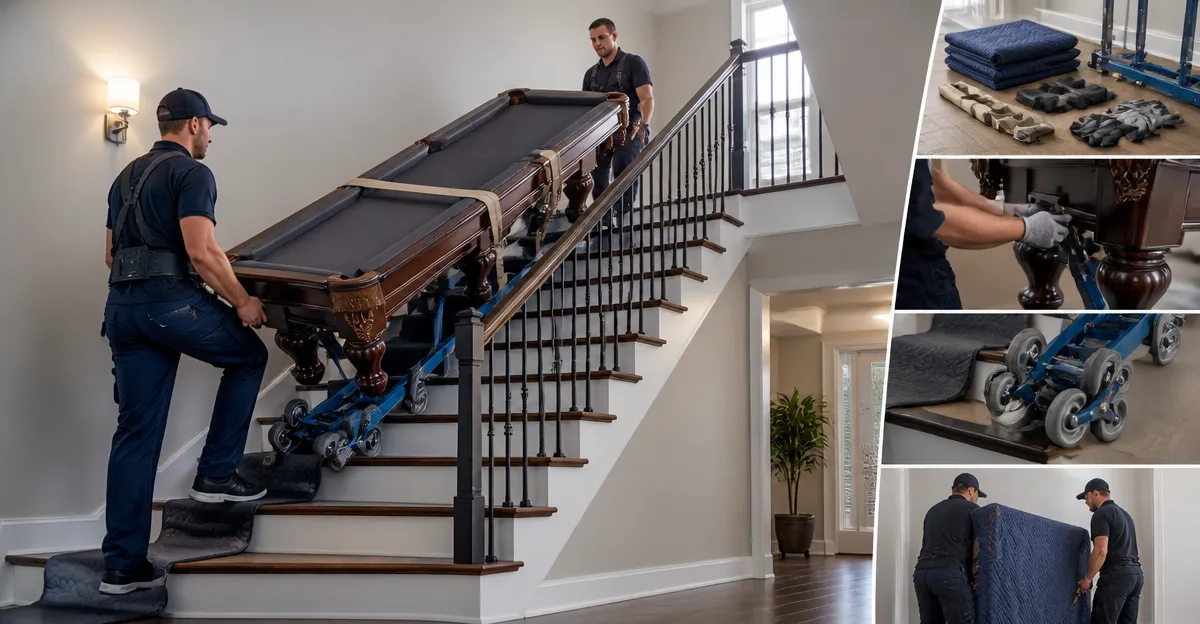
Begin moving the slate slowly, keeping the dolly wheels aligned with the stair tread. The 360° rotating wheels on the Nest Easy Heavy Duty Furniture Dolly allow you to pivot without lifting, which is essential on narrow staircases. Use a hand‑held strap to keep the slate from shifting forward or backward during each step.
Maintain a steady pace and avoid sudden stops. If the stairs are carpeted, place a thin piece of plywood under the dolly wheels to distribute pressure and protect the carpet fibers. For each landing, pause, re‑engage the brakes, and ensure the slate remains level before proceeding.
Step 6: Reassemble the Table in Its New Location
Once the slate reaches the intended room, position it on a sturdy, level surface. Re‑attach the frame using the original hardware, following the manufacturer’s torque specifications. Replace the felt and rails, then reinstall any accessories. Use the included measuring tape to verify that the playing surface is square; a deviation of more than ¼ inch may affect gameplay.
Finally, test the table by rolling a cue ball across the surface. If the slate shows any unevenness, adjust the height‑increasing spacers beneath the dollies and repeat the level check. When satisfied, remove the dollies and store them for future moves.
Tips & Pro Tips
- Always work with at least one additional person; the combined lifting capacity of two adults reduces strain on the back.
- Apply a thin layer of furniture wax to the dolly wheels for smoother motion on hardwood stairs.
- Use moving blankets under the slate during transport to cushion against vibrations that could cause micro‑cracks.
- Check the dolly brakes before each ascent; a partially engaged brake can cause the slate to roll unintentionally.
- If the stairwell is particularly narrow, consider removing the door from its hinges temporarily to gain extra clearance.
Troubleshooting
| Problem | Solution |
|---|---|
| Dolies wobble after loading | Re‑tighten anti‑slip pads and ensure all height spacers are equal; use a level to confirm. |
| Wheels squeak on carpet | Place a thin plywood sheet under the wheels or switch to a dolly with soft rubber wheels, such as the Qenovo 1500 lb Furniture Dolly Set, which includes silent rubber wheels. |
| Slate cracks during lift | Use the extended crowbar for gradual, even lifting; never lift a corner too quickly. |
Conclusion
Moving a slate pool table upstairs safely requires careful planning, the right tools, and disciplined execution. By following the six steps outlined above, using heavy‑duty dollies such as the MYUEA Heavy Duty Furniture Dolly or the KYX Heavy Duty Furniture Dolly, and observing the pro tips, anyone can relocate a pool table without injury or damage. The process emphasizes safety, efficiency, and preservation of the slate’s pristine playing surface.
Products Mentioned in This Guide
Frequently Asked Questions
What tools are essential for moving a slate pool table upstairs?
You’ll need four heavy‑duty furniture dollies, a sturdy moving strap or rope, a screwdriver set for disassembly, and protective padding for the floor and slate.
How should I disassemble a pool table before moving it?
Remove the rails, pockets, and felt, then unscrew the slate slabs and lift them onto dollies, keeping each piece labeled for easier reassembly.
Can I use regular furniture dollies or do I need heavy‑duty ones?
Heavy‑duty dollies are recommended because a slate table can weigh 1,000 lb or more, and they provide the stability needed for stairs.
What steps can I take to protect my floors during the move?
Lay down moving blankets or plywood on stairs and doorways, and use rubber‑capped dollies to prevent scratches or dents.
How do I correctly reassemble a slate pool table after moving it upstairs?
Place the slate slabs back in order, secure them with the original bolts, reinstall the rails and pockets, then stretch and attach new felt if needed.