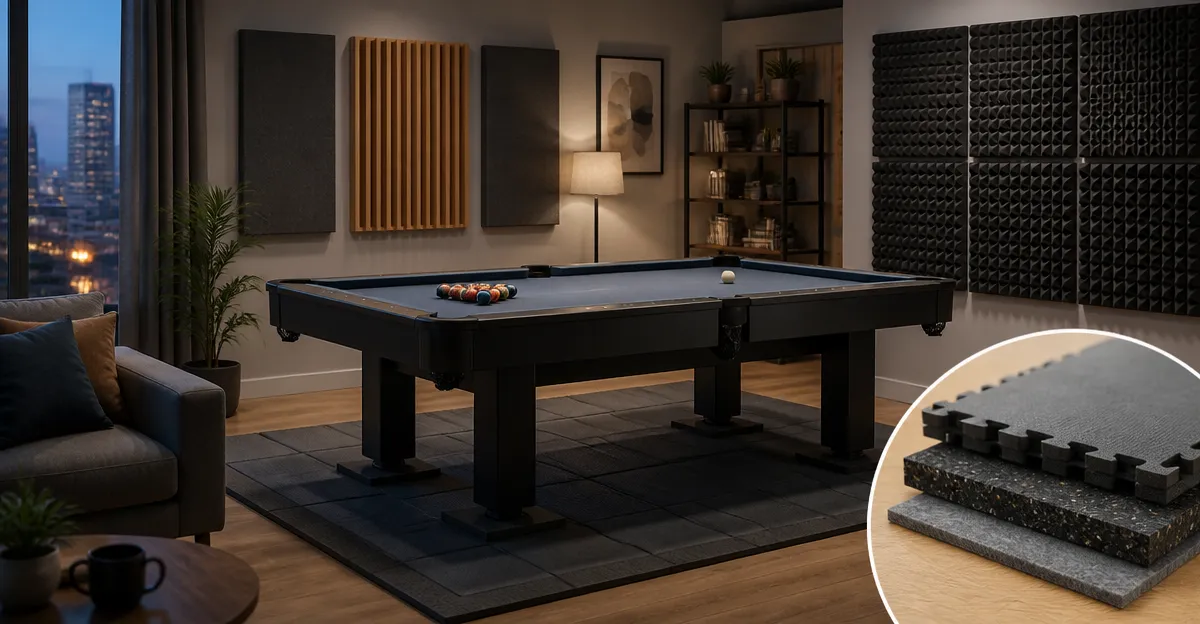
How to Reduce Pool Table Noise in an Apartment: Complete Guide to Soundproofing & Quiet Play
Introduction
Living in an apartment often means sharing walls, floors, and ceilings with neighbors who expect a quiet environment. A pool table, while a source of recreation, can generate significant impact noise and reverberation that travel through the building structure. This guide explains how sound propagates from a billiard table, outlines practical strategies to mitigate that noise, and recommends specific products that have proven effective for apartment dwellers. By the end of the article, readers will understand the science of acoustic control, be able to select the right materials for their budget, and possess a step‑by‑step plan for a quieter game room.
Background and Context
Sound is a vibration that travels through solid, liquid, or gaseous media. When a player strikes a cue ball, the impact creates low‑frequency thuds that travel through the table slate, the wooden frame, and finally into the floor. Those vibrations are amplified by the table’s felt surface and can be transmitted through floor joists into the ceiling below. In addition to impact noise, the open space around a pool table can cause echo, making each shot sound louder than it actually is.
Two primary acoustic phenomena are relevant for apartment installations:
- Impact noise – direct transmission of vibration through the floor structure.
- Airborne noise and reverberation – sound that bounces off walls, ceiling, and the table’s felt, creating a “clanging” effect.
Effective mitigation therefore requires a combination of isolation (preventing vibrations from entering the building structure) and absorption (reducing echo within the room).
Key Strategies for a Quiet Pool Table
1. Isolate the Table from the Floor
Isolation pads or shims placed between the table legs and the floor can dramatically reduce impact transmission. Rubber shims are preferred because they remain flexible under weight while providing a non‑slip grip.
The Haull Pool Table Leg Shims are a 50‑piece pack of 0.06‑inch thick rubber pads. They are designed specifically for billiard tables, are stackable for fine‑tuning, and protect hardwood, tile, or laminate flooring from scratches. Reviewers praise their durability and tool‑free installation, noting that stacking two pads per leg easily corrected a 40‑year‑old table’s wobble.
2. Upgrade the Felt for Faster, Less Vibrating Play
The felt surface influences both ball speed and the amount of vibration transferred to the slate. A medium‑fast, tightly woven felt reduces the “thud” that reaches the floor.
The Accuplay Pool Table Felt is a 20‑ounce, 75% wool/25% polyamide material pre‑cut for 8‑foot tables. Users highlight its easy installation, ample excess for precise fitting, and a pleasant texture that balances speed and control. At a price of $122.45 and a 4.6‑star rating from 1,358 reviews, it offers a cost‑effective upgrade that also contributes to quieter play by dampening high‑frequency vibrations.
3. Add Acoustic Absorption to the Room
Even with a well‑isolated table, sound will still reflect off hard surfaces. Installing acoustic blankets or panels on walls and ceilings can absorb reverberant energy, lowering overall noise levels.
Two complementary options are available:
- US Cargo Control Sound Blanket – a 96" × 80" heavy woven polyester blanket with cotton batting, machine‑washable, and equipped with 18 grommets for easy hanging. Its NRC rating of 0.35 indicates moderate absorption across a broad frequency range. Reviewers note its effectiveness at reducing echo in home studios and its aesthetic compatibility with dark décor.
- BSHEAD Acoustic Wall Panels – 12" × 12" high‑density polyester foam tiles with self‑adhesive backing. At 0.47 inches thick and 1.2 lb/ft³ density, they provide focused absorption on problematic wall sections. Users appreciate the easy peel‑and‑stick installation and the modern 45° chamfer design that adds visual interest.
4. Consider Mass‑Loaded Vinyl for Structural Blocking
If the greatest concern is preventing sound from traveling through walls or ceilings, a dense barrier such as mass‑loaded vinyl (MLV) is required. While MLV does not stop impact vibration, it adds mass that blocks airborne noise.
The Soundsulate Mass Loaded Vinyl provides a 1 lb/ft², 0.12‑inch thick barrier with an STC rating of 27. It is non‑toxic, flexible, and can be cut to fit any surface. Reviewers acknowledge its heaviness but also its effectiveness in muffling street traffic and neighbor noise when fully sealed.
Comparison and Selection Guide
| Product | Primary Function | Key Specs | Price | Rating |
|---|---|---|---|---|
| Haull Pool Table Leg Shims | Floor isolation | 50 pcs, 0.06" thick, rubber, stackable | $12.59 | 4.6/5 (267) |
| Accuplay Pool Table Felt | Playing surface upgrade | 20 oz, 75% wool/25% polyamide, pre‑cut 54" × 102" | $122.45 | 4.6/5 (1,358) |
| US Cargo Control Sound Blanket | Room‑wide absorption | 96" × 80", 12 lb, NRC 0.35, 18 grommets | $76.48 | 4.3/5 (1,112) |
| BSHEAD Acoustic Wall Panels | Targeted wall absorption | 12" × 12", 0.47" thick, 1.2 lb/ft³, self‑adhesive | $21.99 | 4.3/5 (518) |
| Soundsulate Mass Loaded Vinyl | Airborne noise blocking | 1 lb/ft², 0.12" thick, 4' × 25' roll | $259.00 | 4.2/5 (372) |
When selecting products, consider the following hierarchy:
- Isolation first – shims or rubber pads are the most affordable way to stop floor‑borne impact.
- Surface upgrade – a high‑quality felt reduces vibration at the source.
- Absorption next – blankets and panels tame echo without major construction.
- Blocking as a final layer – MLV is reserved for apartments with thin walls or severe neighbor complaints.
Best Practices & Tips
- Measure before you cut: Use a laser level to confirm floor flatness; uneven floors may require additional shims.
- Secure the felt properly: Apply a thin layer of spray adhesive around the rail edges before laying the Accuplay Felt. This prevents slippage over time.
- Hang blankets at ear level: Position the US Cargo Control Blanket so that its center aligns with the typical listening height; this maximizes absorption of mid‑frequency reverberation.
- Seal gaps: When installing MLV, use acoustic caulk around edges to avoid sound leaks that compromise the STC rating.
- Layer wisely: A common configuration is floor shims → felt → acoustic blanket on walls → MLV behind the blanket for maximum isolation.
- Test after each step: Play a series of standard break shots and ask a neighbor to confirm reduced noise before proceeding to the next layer.
Frequently Asked Questions
- Q1: Will rubber shims damage hardwood floors?
- A: No. The Haull Shims are made of non‑abrasive rubber that protects flooring while providing a stable, non‑slip base.
- Q2: Can I install the felt myself without professional help?
- A: Yes. The pre‑cut Accuplay Felt includes extra material for precise fitting. Follow online tutorials and use a staple gun for a clean finish.
- Q3: How many acoustic blankets are needed for a typical 10 × 12 ft game room?
- A: One 96" × 80" blanket covers most of a single wall. For balanced absorption, install two blankets on opposite walls and supplement with BSHEAD Panels on the remaining surfaces.
- Q4: Is mass‑loaded vinyl safe for indoor air quality?
- A: The Soundsulate MLV is non‑toxic, does not off‑gas, and can be used in residential spaces without ventilation concerns.
- Q5: Will these solutions reduce the sound of the cue ball striking the rails?
- A: Reducing impact noise at the source (shims and felt) lessens the transmission of that “clack.” Adding absorption panels further dampens the echo, resulting in a noticeably quieter experience.
- Q6: How do I maintain the acoustic blankets?
- A: The blankets are machine‑washable; hang them to dry after washing. Avoid prolonged sun exposure to prevent fading.
- Q7: Can I use the shims for other furniture?
- A: Absolutely. Reviewers have successfully used extra shims to level bookshelves, TV stands, and other heavy items.
Conclusion
Reducing pool table noise in an apartment is achievable through a systematic approach that isolates impact, upgrades the playing surface, absorbs reverberant sound, and, when necessary, blocks airborne noise. By employing the Haull Pool Table Leg Shims, installing the Accuplay Felt, and adding acoustic treatments such as the US Cargo Control Sound Blanket and BSHEAD Acoustic Wall Panels, most apartment residents can enjoy quiet, uninterrupted play. For those with especially thin walls, the Soundsulate Mass Loaded Vinyl offers an additional layer of protection. Implement the best‑practice tips, test after each stage, and you will create a game room that respects both your enjoyment and your neighbors’ peace.
Products Featured in This Guide
Accuplay Pool Table Felt
Price: $122.45 | Rating: 4.6/5 (1,358 reviews)
Featured for its pre‑cut design, medium‑fast speed, and wool‑polyamide blend that reduces vibration while providing a premium playing surface.
Haull Pool Table Leg Shims
Price: $12.59 | Rating: 4.6/5 (267 reviews)
Featured for providing a simple, tool‑free method to level table legs, eliminate wobble, and prevent floor damage.
US Cargo Control Sound Blanket
Price: $76.48 | Rating: 4.3/5 (1,112 reviews)
Featured for its large size, heavy construction, and easy hanging system that adds room‑wide acoustic absorption.
BSHEAD Acoustic Wall Panels
Price: $21.99 | Rating: 4.3/5 (518 reviews)
Featured for their high density, self‑adhesive backing, and decorative chamfer design that targets echo on specific walls.
Soundsulate Mass Loaded Vinyl
Price: $259.00 | Rating: 4.2/5 (372 reviews)
Featured for its high mass per square foot and STC 27 rating, providing an effective barrier against airborne noise when fully sealed.